
Showing posts with label Bicol. Show all posts
Showing posts with label Bicol. Show all posts
Sunday, January 30, 2011
Dried Gabi Leaves (Dried Taro Leaves)
Our Dried Taro "Gabi" Leaves are organically and naturally grown in the Philippines.


Saturday, January 15, 2011


Saturday, January 8, 2011
Information on Philippine Bird'sEye Pepper (Tagalog-Siling Labuyo)


Bird's eye chili (Thai: พริกขี้หนู, RTGS: phrik khi nu, IPA: [pʰrík kʰîː nǔː], literal: mouse dropping chili; Tagalog: siling labuyo) is a chili pepper of the species Capsicum frutescens L. in the family Solanaceae, commonly found in Cambodia, Laos, Vietnam, Thailand, Malaysia, Indonesia, the Philippines and Singapore.
It can also be found in India, mainly Kerala, where it is used in traditional dishes of the Kerala cuisine (pronounced in Malayalam as kanthari mulagu). This species (known as kochchi in sinhalese) is also found in rural areas of Sri Lanka, where it is used as a substitute for green chillies. It is also a main ingredient in kochchi sambal, a salad made using freshly scraped coconut ground with thai chillies and seasoned with salt and lime juice.
The term Bird's eye chili is also used for the North American Chiltepin pepper, both due to their small round shape and because they're widely spread by birds.
The bird's eye chili plant is a perennial with small, tapering fruits, often 2-3, at a node. The fruits of most varieties are red, some are yellow, purple or black. The fruits are very pungent. The flowers are greenish white or yellowish white.
Taxonomically, it has long been thought that the bird's eye chili belongs to Capsicum frutescens L.,but there are now some who list the bird's eye chili as belonging to Capsicum chinense.
The bird's eye chili is small but packs quite a lot of heat. At one time it was even listed as the hottest chili in the Guinness Book of World Records but other hotter varieties of chili have since been identified. It measures around 50,000-100,000 Scoville units which is at the lower end of the range for the hotter Habanero chili.
Bird's eye Peppers
- Plant height - up to 2meters
- Stem color - Green
- Leaf color - Green
- Leaf size - 3–8 cm by 2–4 cm
- Fruit color at maturity - green, orange and red
- Fruit shape - conical
- Fruit length - 2–3 cm
- Fruit width at shoulder - .5 cm
- Fruit weight - 2-3 grams
- Fruit surface - smooth
- Seed color - Light tan
- Seeds per chili - 10-20
The fruit of the bird's eye chili is popularly used as a spice and as a chili condiment in Filipino, Indonesian, Laotian, Malaysian, Thai, and Vietnamese cuisine. It is what gives local dishes, such as the Filipino bicol express, their fiery zing.
The chilies can also be used to flavor vinegar.
The leaves are also edible and can be eaten as a vegetable, for instance in the Filipino dish tinola.
Philippine Chili Peppers (Tagalog-Siling Labuyo, Bicol-Sambalas)
Philippine Bird's Eye Pepper
We are busy, busy working on a lot of research and certifications for the approval of the importation of this Philippine Bird's Eye Pepper from the Philippines. In the meantime, we want to share with you some photos that we have research on this naturally grown Philippine Bird's Eye Pepper. This will give you some ideas how they are grown and shipped and then to your everyday dishes.
We will be updating and posting more information and photos as we go along our progress in our approval by the US Department of Agriculture & US Food & Drug Administration.


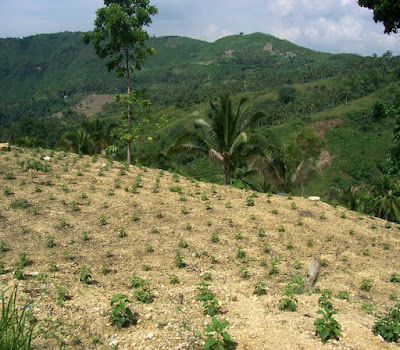

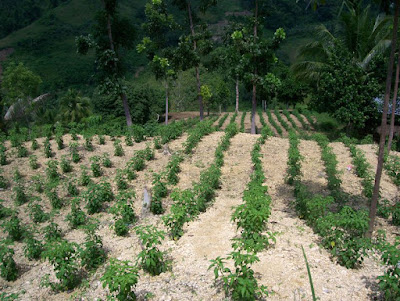


 Photos of the farm courtesy of R. Tequillo
We are busy, busy working on a lot of research and certifications for the approval of the importation of this Philippine Bird's Eye Pepper from the Philippines. In the meantime, we want to share with you some photos that we have research on this naturally grown Philippine Bird's Eye Pepper. This will give you some ideas how they are grown and shipped and then to your everyday dishes.
We will be updating and posting more information and photos as we go along our progress in our approval by the US Department of Agriculture & US Food & Drug Administration.


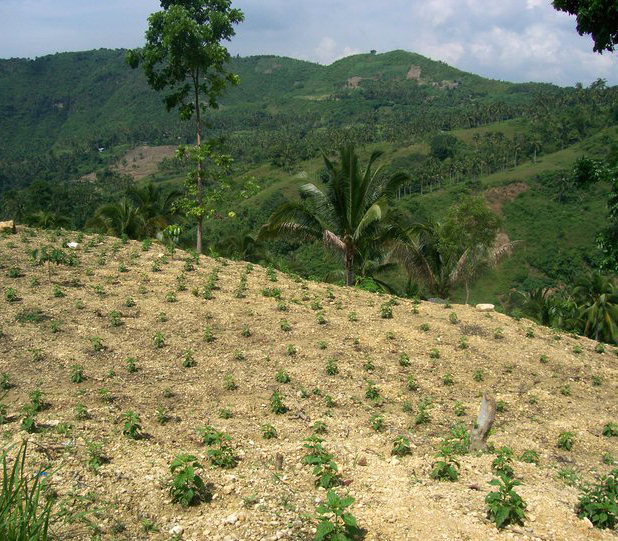

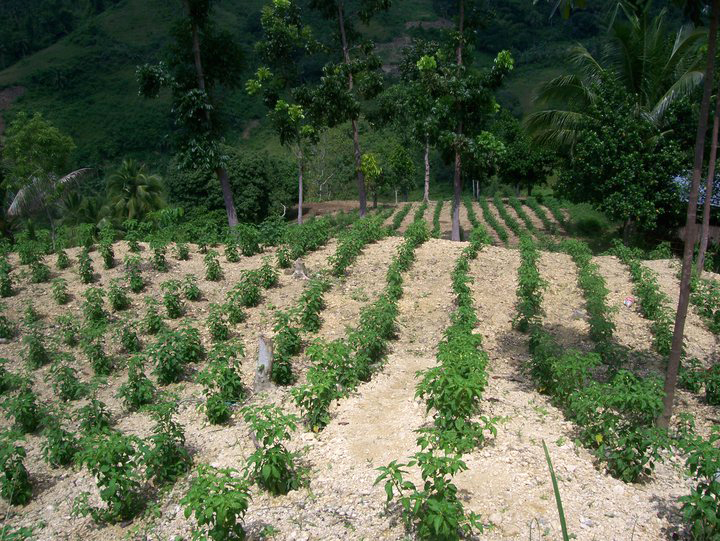


Tuesday, January 4, 2011
Pili Nut - Dried without shell

Dried and Shelled Pili Nuts
Its been ages that I have not been to Bicol region where this type of nut grows abundantly but I can vividly remember how this Pili Nuts taste and look like. I tell you, they are much better than macadamia nuts and pine nuts. Although, we have seen some Pili Nut in some Asian stores, they are mainly sugar or caramel coated. We are really looking forward to introduce our Pili Nuts to the US, Canada & Qatar market.
We'll keep you posted. We will also be featuring more information of our products, its uses, recipes and much more, so please stay tuned with us!
Sunday, January 2, 2011
Our Top 4 Products
Happy New Year everyone!
Importing and Exporting food products to the US is quite tedious. There are so many procedures and strict rules to follow to be able to have food product be available to our customers.
Here's a list of our initial Top 4 products that we are working on to be available in the US and Qatar market:
#1 PILI NUT - Dried Plain or Dried Salted
#2 PHILIPPINE CHILI PEPPERS - Dried
#3 GABI LEAVES (TARO) - Dried
#4 PHILIPPINE MANGOES - Dried chips


Importing and Exporting food products to the US is quite tedious. There are so many procedures and strict rules to follow to be able to have food product be available to our customers.
Here's a list of our initial Top 4 products that we are working on to be available in the US and Qatar market:
#1 PILI NUT - Dried Plain or Dried Salted
#2 PHILIPPINE CHILI PEPPERS - Dried
#3 GABI LEAVES (TARO) - Dried
#4 PHILIPPINE MANGOES - Dried chips


Wednesday, December 29, 2010
Dried Gabi Leaves (Dried Taro Leaves)
Taro leaves (Gabi leaves) - one of our products for export to the US, Canada & Qatar.
It is understandable for you to know that there is a vast population of Asians in the US so it is normal to have our dried gabi leaves (taro leaves) in our product line.
However, you would probably wonder why Qatar? Well, I have not been there (but hopefully someday I will be able to see and experience the beauty of this country) but one of our partners have lived and worked there for 11 years. He had told me about how significant the Filipino population is in Qatar and still growing tremendously due to its more stable economy than other countries. There are a lot of various organizations for Filipinos and its regions. Filipinos love to gather together and have their native food. I tell you, it is always a feast of various dishes from meat to vegetables and desserts.
If you look at some photos of Qatar or go to www.qatarliving.com, you would find that most of the contract workers are of Asian heritage. This is the best market for Asian food & flavors being a country that abundance of seafood & meat products.
Let me show you one of the main dishes that use this dried or even fresh taro leaves (gabi leaves)
LAING


It is understandable for you to know that there is a vast population of Asians in the US so it is normal to have our dried gabi leaves (taro leaves) in our product line.
However, you would probably wonder why Qatar? Well, I have not been there (but hopefully someday I will be able to see and experience the beauty of this country) but one of our partners have lived and worked there for 11 years. He had told me about how significant the Filipino population is in Qatar and still growing tremendously due to its more stable economy than other countries. There are a lot of various organizations for Filipinos and its regions. Filipinos love to gather together and have their native food. I tell you, it is always a feast of various dishes from meat to vegetables and desserts.
If you look at some photos of Qatar or go to www.qatarliving.com, you would find that most of the contract workers are of Asian heritage. This is the best market for Asian food & flavors being a country that abundance of seafood & meat products.
Let me show you one of the main dishes that use this dried or even fresh taro leaves (gabi leaves)
LAING


LAING
I was born and raised in Albay, a town in Bicol Region where we basically have this filipino dish at least 2 or 3 times a week. Since we have the plant growing abundantly in our backyard, we usually cook the leaves fresh. One good thing about our gabi plant (taro) is that it is so tender and does not have the itchy feeling when you eat them. There are so many varieties of this gabi (taro) leaves some of which are tough and not really good. Another technique that I had seen my grandma shredding the leaves is not to include the hard part or veins like on the leaves to make it tender when cooked.
It is cooked with ginger, garlic, sometimes meat, shrimp or dried fish and coconut milk. Sometimes the stalks are included too, by peeling and slicing them but since we have the abundance of the plant, our grandma uses only the leaves itself. One distinguishing factor of our laing from our region is cooking it with our local hot chili pepper called "siling labuyo" or sambalas (we also sell the dried sambalas or siling labuyo)
Bicolanos are well known for this hot and spicy dish. You can smell the aroma of the spices--the pepper, garlic, ginger and seasoned with fish sauce.
Later in this food blog, I will be posting the recipe for this Laing.
Until next time, I can just imagine myself now eating this laing with our jasmin steamed rice--yummy!
So stay tuned when we will post our local retailers for this dried taro leaves.
Photos courtesy of Bikolandia! and 80 Breakfasts
Photos courtesy of Bikolandia! and 80 Breakfasts
Monday, December 20, 2010
Welcome to our Blog for "The Nature's Market"
Welcome to our Blog!
 You would probably wonder why our company is named "The Nature's Market"
To give you a brief introduction, our company had been in the crafts business in the US, Canada & UK and the Philippines (as our artisan's production facility) in the late 90's.
The business was focused on crafts until 2010 that we have made final decisions to include various natural food & flavors from around the world.
Being Asian by heritage, I grew up with our family and friends enjoying a simple lunch or dinner consisting of fish, meat, soups, desserts and not to forget those tropical fruits.
Then late 2010, fate brought me to an old college friend.
Its been almost 30 years that had passed that we have not seen each other nor had any communications.
We had lived different lives, have our own families and lived worlds apart.
As old friends, we talked about how life was so simple back then, what transpired in between the years, career, family life and so on.
Both of us came from humble beginnings and have the passion of helping and encouraging others to fulfill their dreams into a reality.
Then, we discussed business and how to survive in this struggling economy.
Being in business for so many years, I didn't realized the potential of doing business outside my comfort zone. Fast forward--We worked together for our common common goal--"Working towards becoming more compassionate to those fortunate than us" thus "The Nature's Market" -- Being financially solid means capable of sharing more--
Then for me, it is the love for getting together with family & good friends over a simple dish. I love to cook, to blog about my passion for cooking, my new recipes, travel, my hopes & dreams and much more.
Our company will be importing and exporting to the US, Canada, UK & Qatar various flavors, spices and food from the Philippines and hopefully to expand to include products from other Asian & tropical countries.
We will be featuring various food items, recipes, our food experiences, travel and photos of places that we love and visit in relation to this business.
Later on, we will be posting more about ourselves, our work experiences, our passion and hobbies and more.
So, please stay tuned!

To give you a brief introduction, our company had been in the crafts business in the US, Canada & UK and the Philippines (as our artisan's production facility) in the late 90's.
The business was focused on crafts until 2010 that we have made final decisions to include various natural food & flavors from around the world.
Being Asian by heritage, I grew up with our family and friends enjoying a simple lunch or dinner consisting of fish, meat, soups, desserts and not to forget those tropical fruits.
Then late 2010, fate brought me to an old college friend.
Its been almost 30 years that had passed that we have not seen each other nor had any communications.
We had lived different lives, have our own families and lived worlds apart.
As old friends, we talked about how life was so simple back then, what transpired in between the years, career, family life and so on.
Both of us came from humble beginnings and have the passion of helping and encouraging others to fulfill their dreams into a reality.
Then, we discussed business and how to survive in this struggling economy.
Being in business for so many years, I didn't realized the potential of doing business outside my comfort zone. Fast forward--We worked together for our common common goal--"Working towards becoming more compassionate to those fortunate than us" thus "The Nature's Market" -- Being financially solid means capable of sharing more--
Then for me, it is the love for getting together with family & good friends over a simple dish. I love to cook, to blog about my passion for cooking, my new recipes, travel, my hopes & dreams and much more.
Our company will be importing and exporting to the US, Canada, UK & Qatar various flavors, spices and food from the Philippines and hopefully to expand to include products from other Asian & tropical countries.
We will be featuring various food items, recipes, our food experiences, travel and photos of places that we love and visit in relation to this business.
Later on, we will be posting more about ourselves, our work experiences, our passion and hobbies and more.
So, please stay tuned!
Subscribe to:
Posts (Atom)